
Moonveil Momentum: Four Watches, One Point of View
Updated: Aug 17
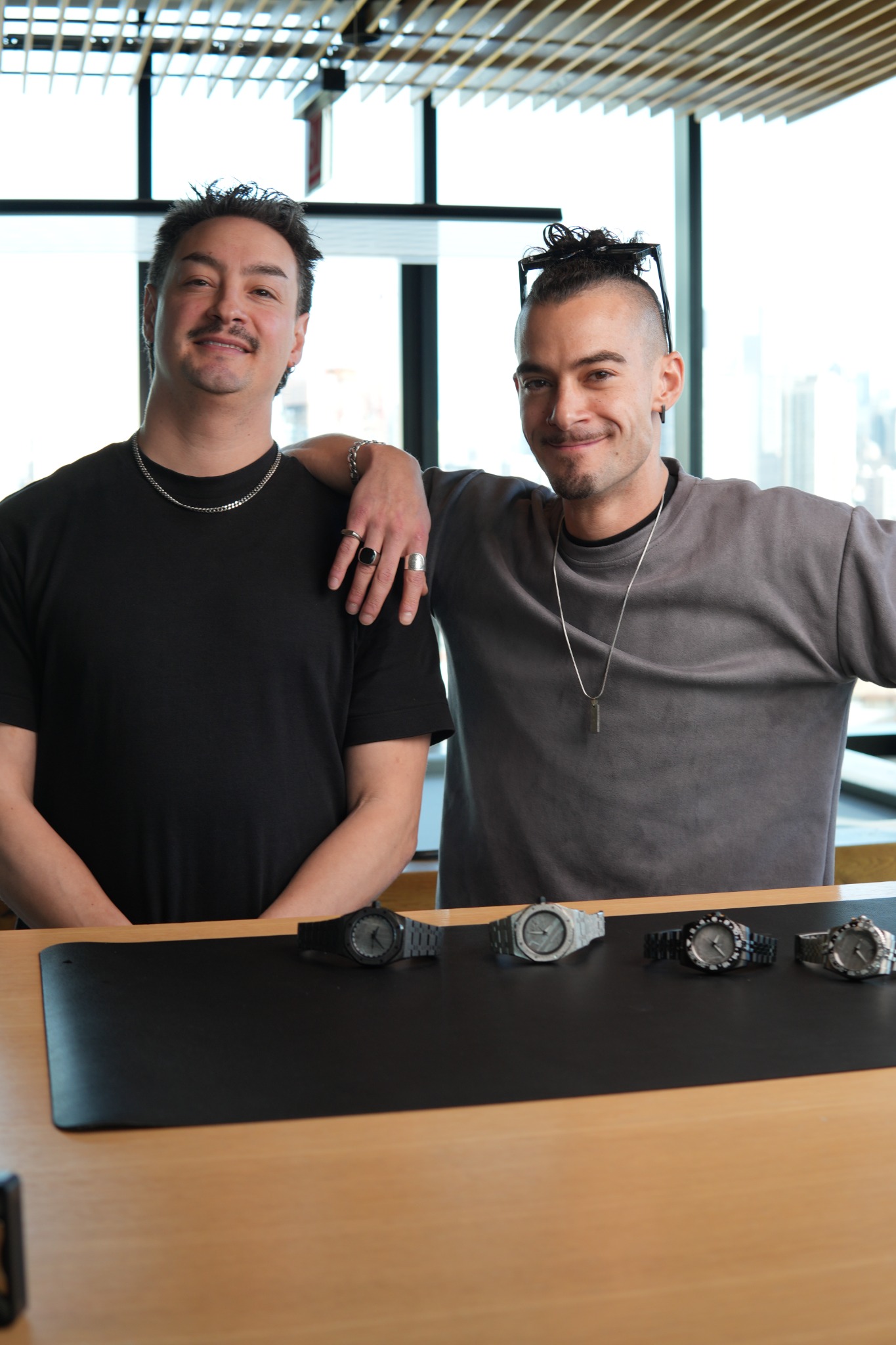
Moonveil Momentum is the first collection that made the Tempo point of view feel complete. Four watches sit inside it—Apex Nocturne, Solaris, Opus, and Solaris Nocturne—but the goal was never to make four versions of the same object. We wanted a family resemblance without sameness: shared mechanics, shared material language, and enough difference in architecture that each watch carries its own attitude.
One collection, four attitudes
The common ground is deliberate. The current four models use automatic mechanical movements with 40-hour power reserves. Meteorite runs through the collection as the visual and material center, with genuine Muonionalusta verified on Solaris, Opus, and Solaris Nocturne. Around that center, we change proportion, finish, bracelet, and tone. Those changes are not cosmetic afterthoughts. They decide how the watch reads before anyone studies the specifications.
One collection. Four attitudes.
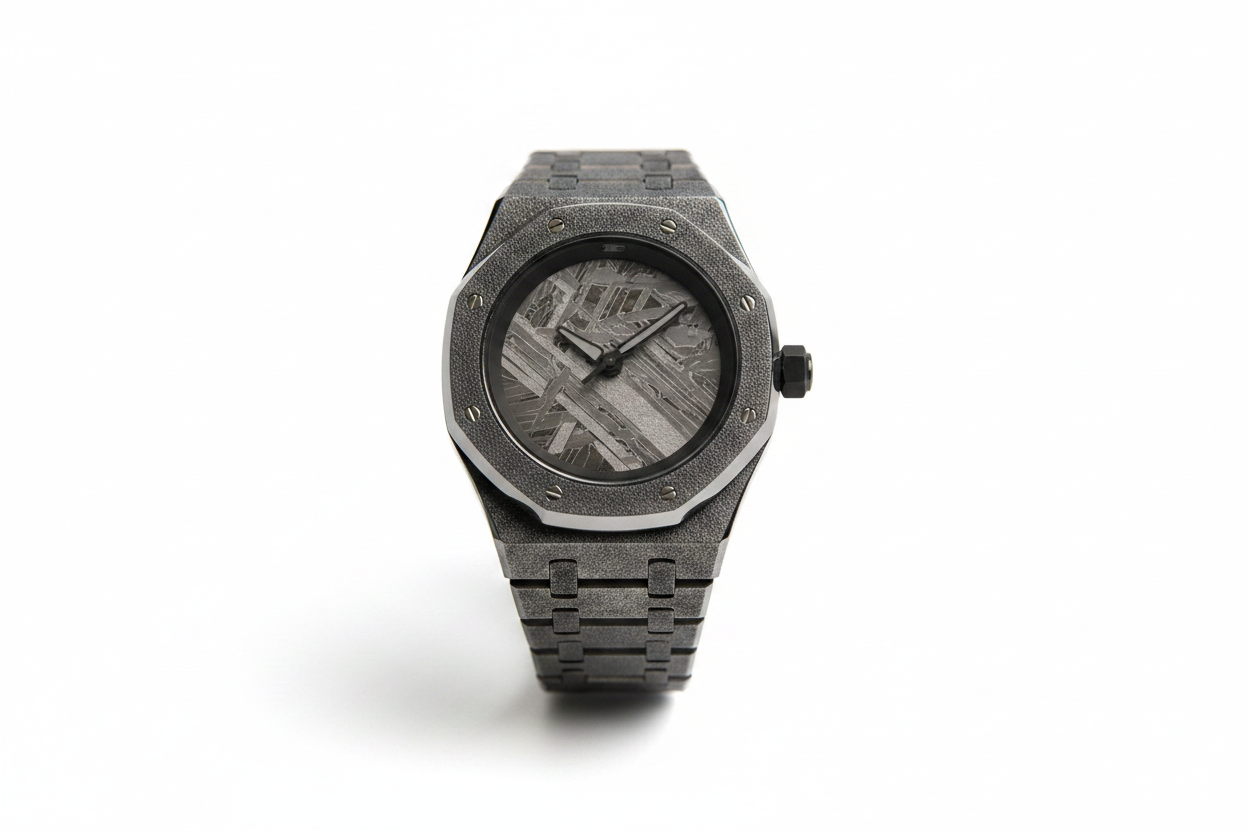
Apex Nocturne: architecture first
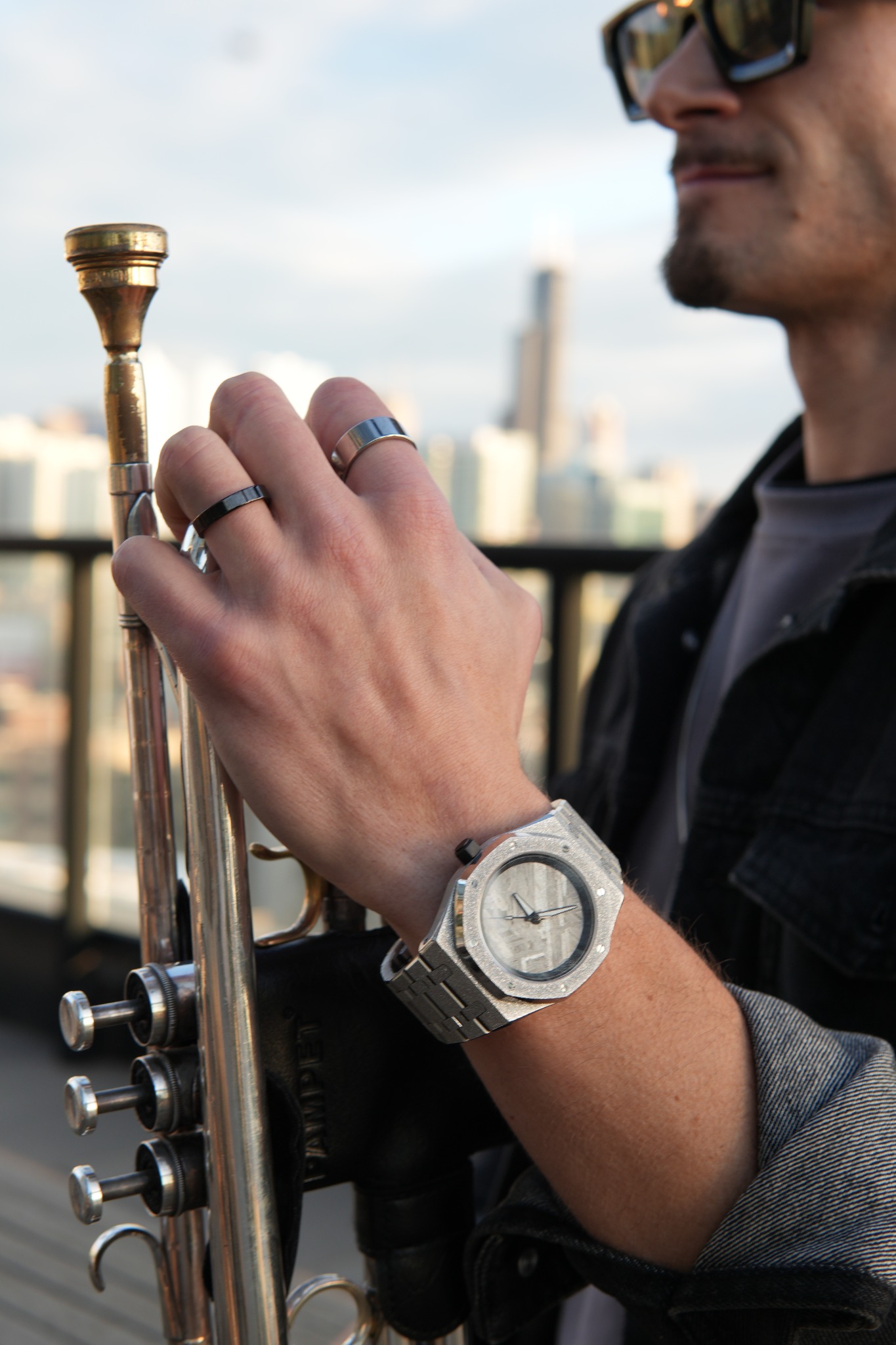
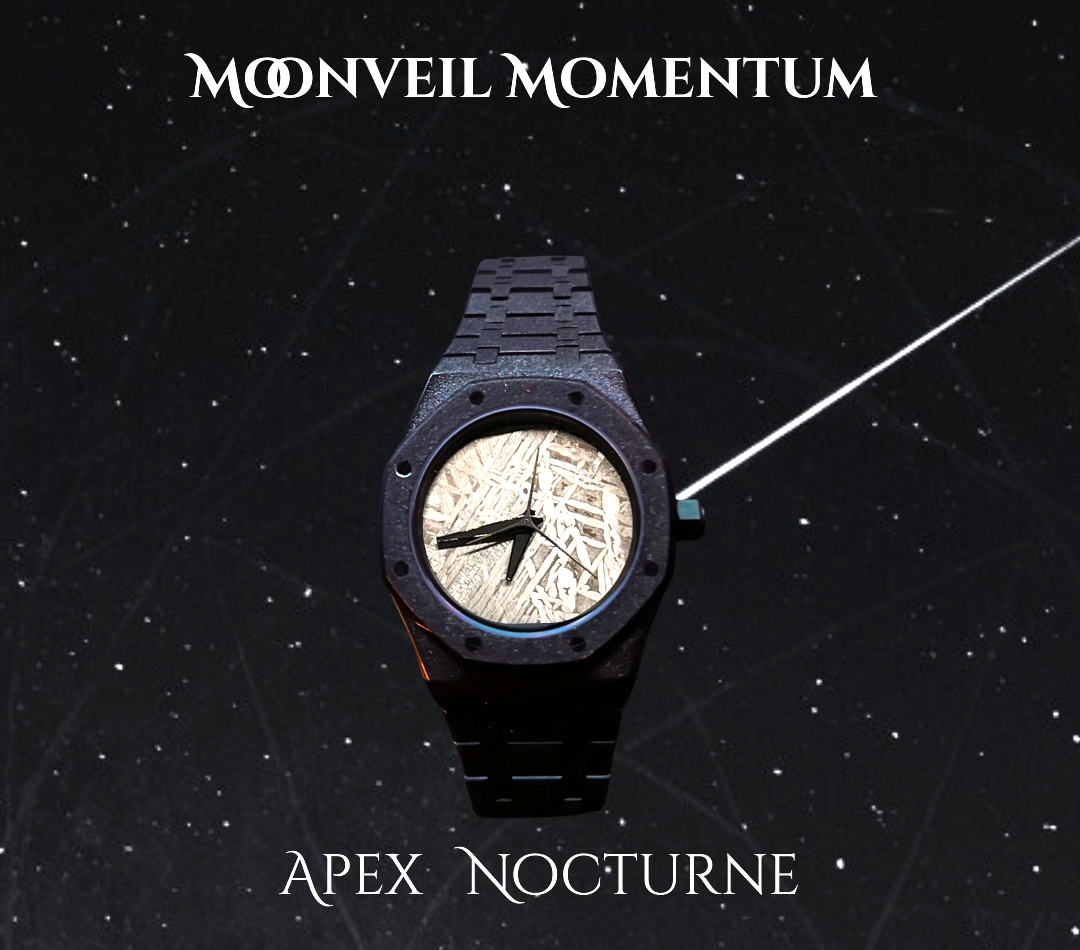
Apex Nocturne is the most architectural watch in the group. The 41mm black case and bezel-less construction create one continuous, dark frame around the meteorite dial. We wanted the case to feel drawn rather than decorated—sharp enough to hold its own, quiet enough to let the dial move when the light changes. Inside is a 24-jewel automatic mechanical movement with a 40-hour reserve and the essential complications: hours, minutes, seconds, and date.
Apex is the watch for someone who likes restraint with presence. It does not need a crowded dial or extra visual noise. The silhouette does the work, then the material takes over at close range.
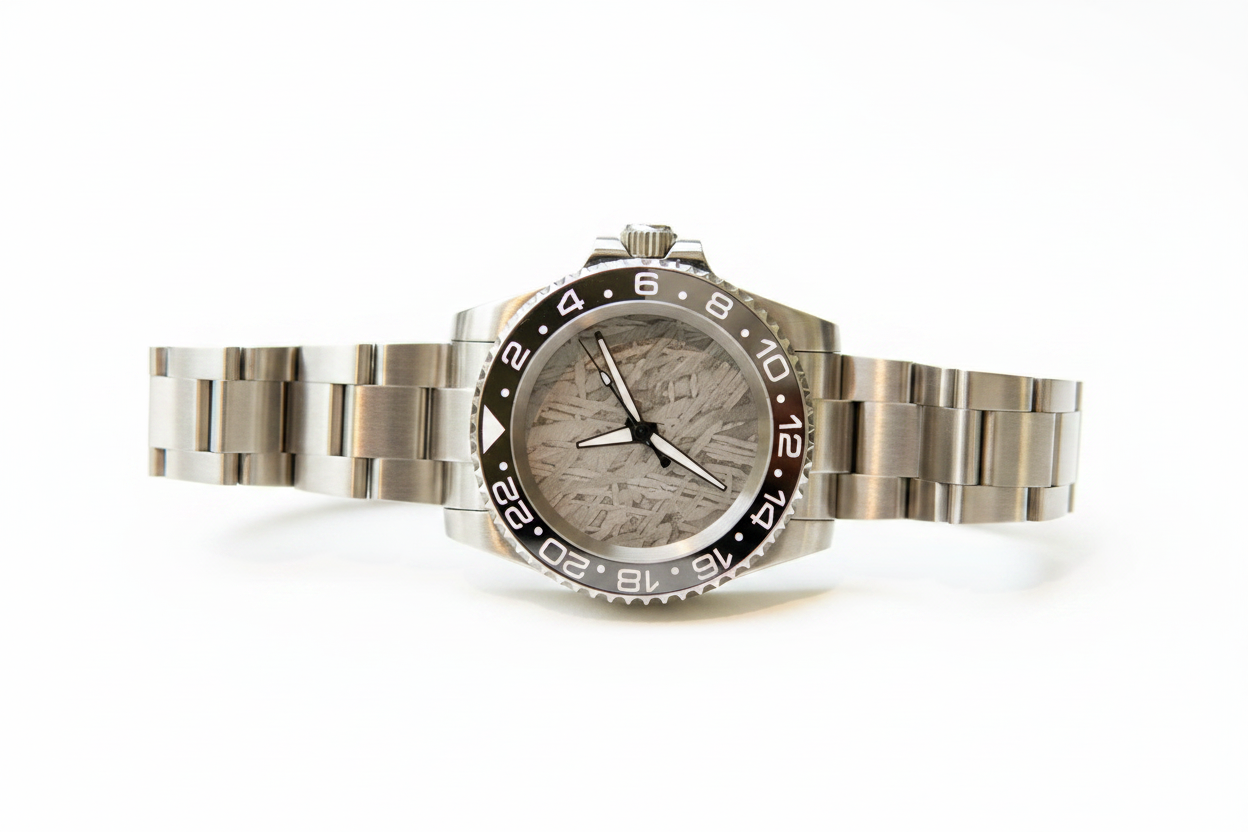
Solaris: the collection in daylight
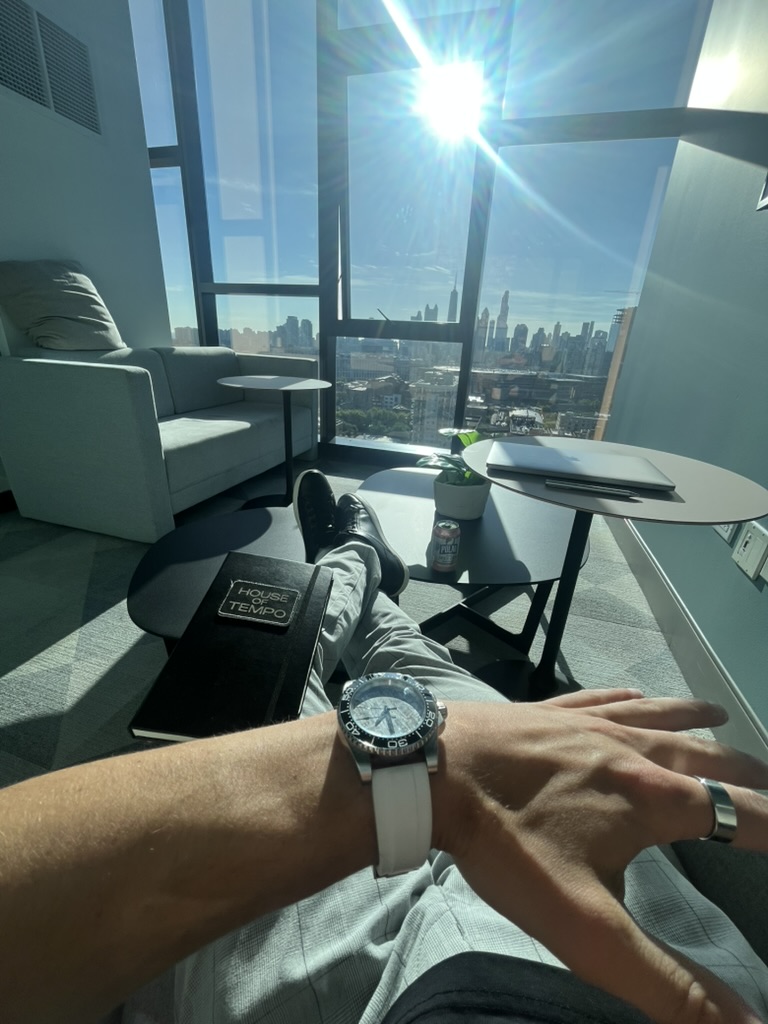
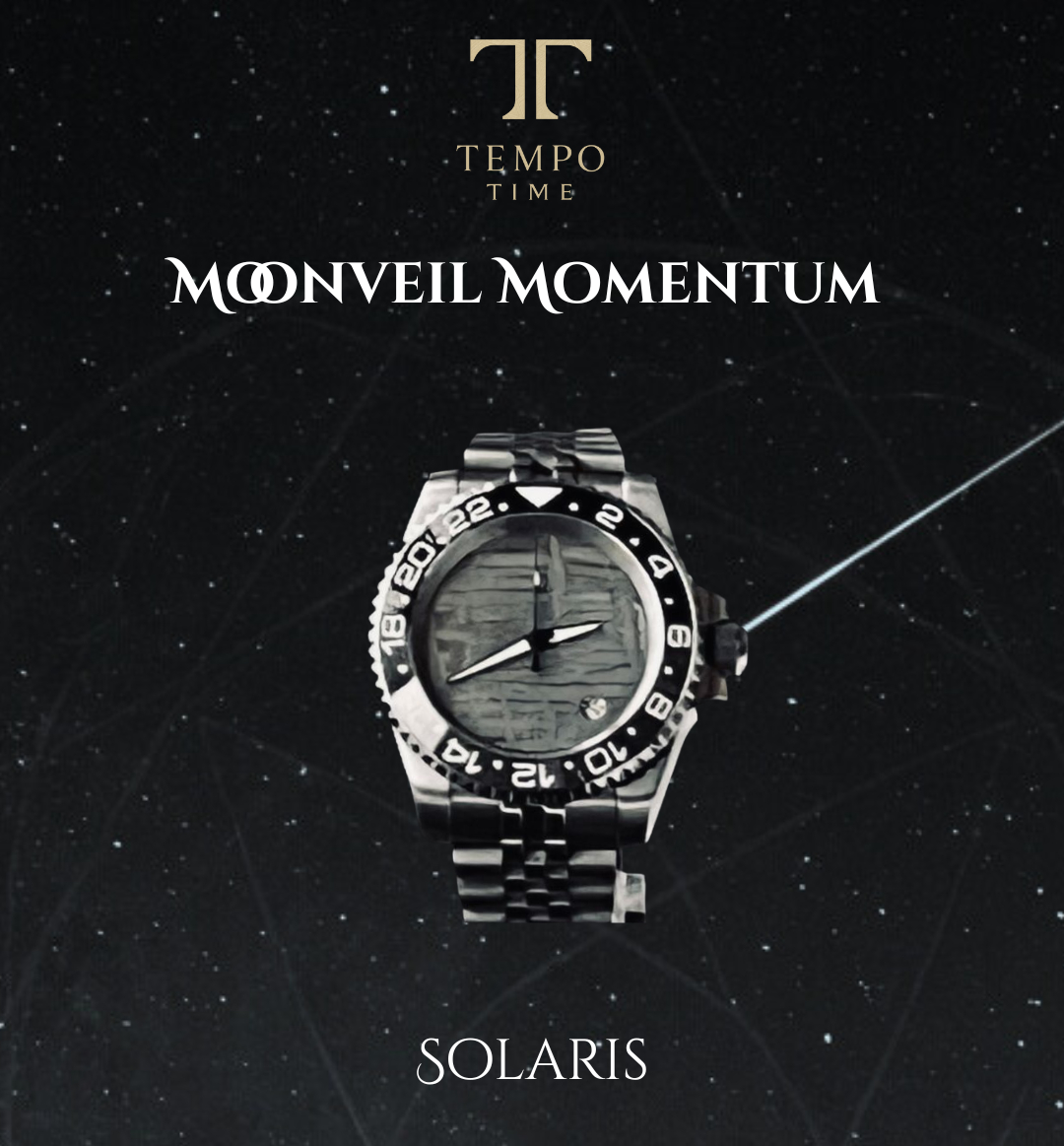
Solaris is the clearest expression of the collection’s everyday side. Its 40mm stainless-steel case and Jubilee bracelet give the watch a brighter, more fluid presence. The genuine Muonionalusta meteorite dial sits inside that reflective structure without becoming overly formal. A 24-jewel automatic mechanical movement and 40-hour reserve keep the mechanics in the same Tempo cadence as the rest of the collection.
What we like about Solaris is that it does not force the meteorite to behave like a special-occasion material. It can live in a normal day. The bracelet catches light, the dial changes with angle, and the watch stays composed rather than theatrical.
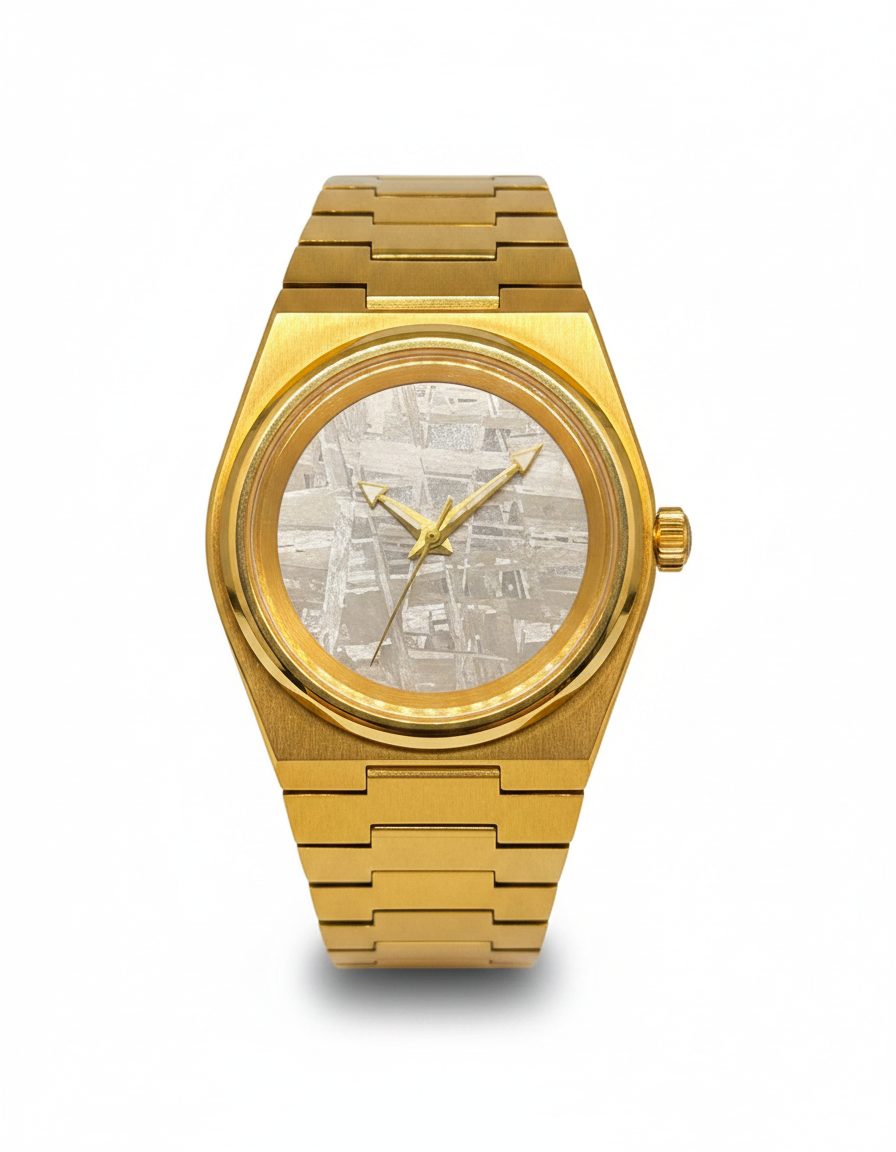
Opus: warmth and performance
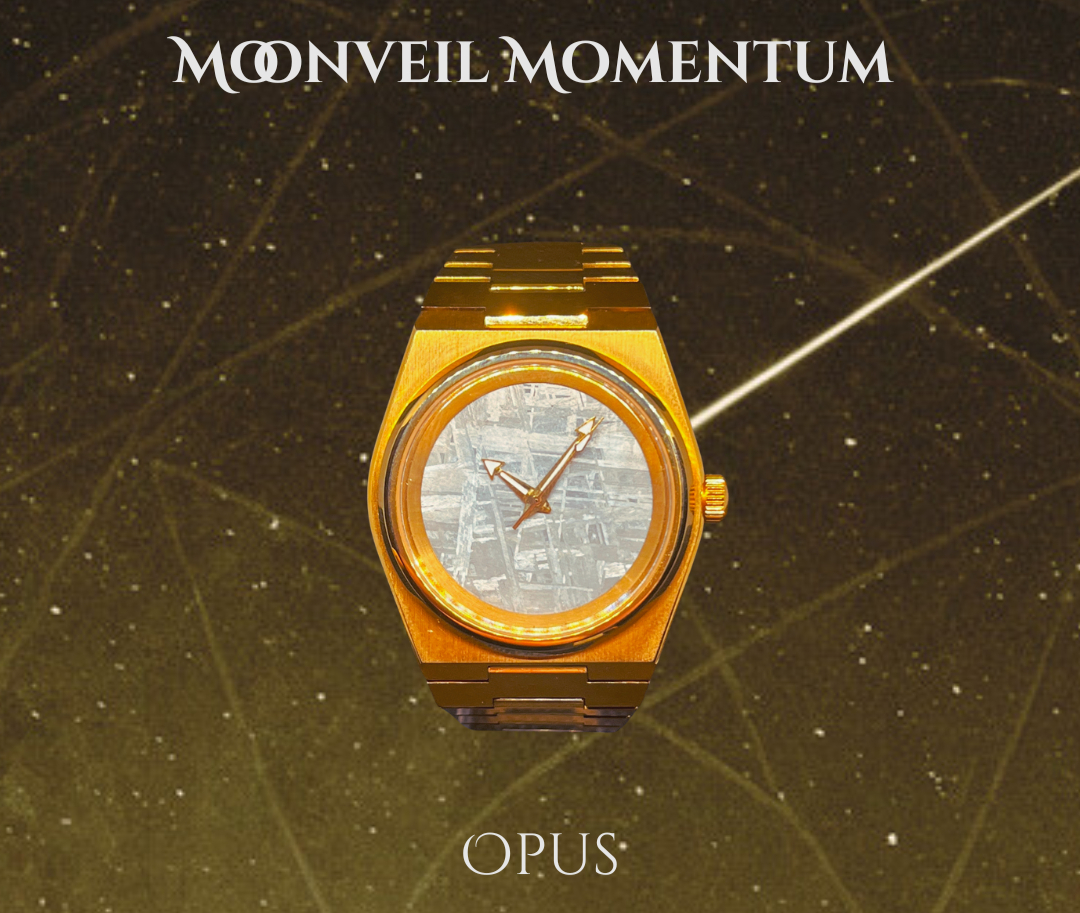
Opus changes the emotional temperature. The 40mm PVD gold case puts genuine Muonionalusta meteorite inside a warmer frame, while sapphire crystal and a 24-jewel automatic movement running at 21,600 beats per hour bring a more formal technical register. It still carries the same 40-hour reserve, but the watch reads differently on the wrist: richer, more deliberate, closer to an evening instrument than an everyday neutral.
The name matters because music is part of the Tempo language, but the watch still has to earn that name through proportion. Gold can become loud quickly. The answer was not to add more. It was to keep the dial, case, and movement disciplined enough that the warmth feels intentional.
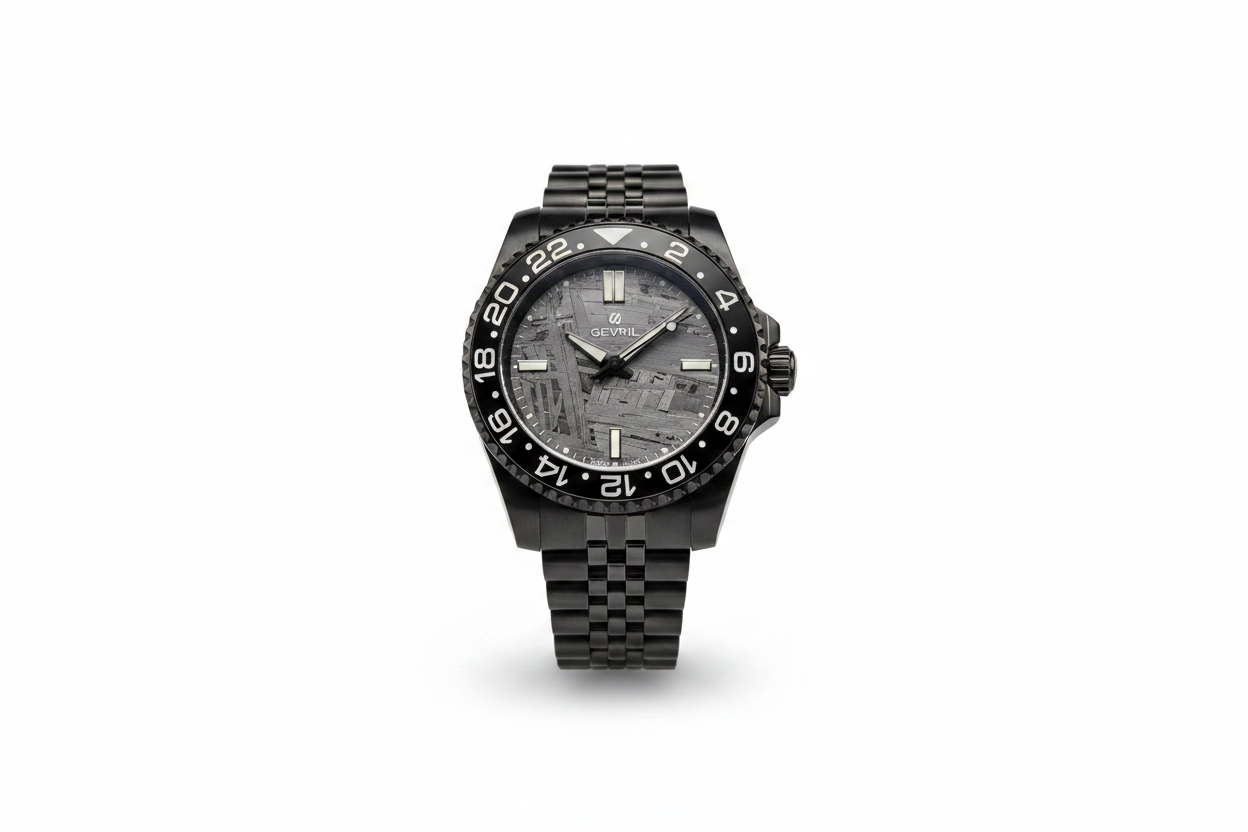
Solaris Nocturne: the darker mirror
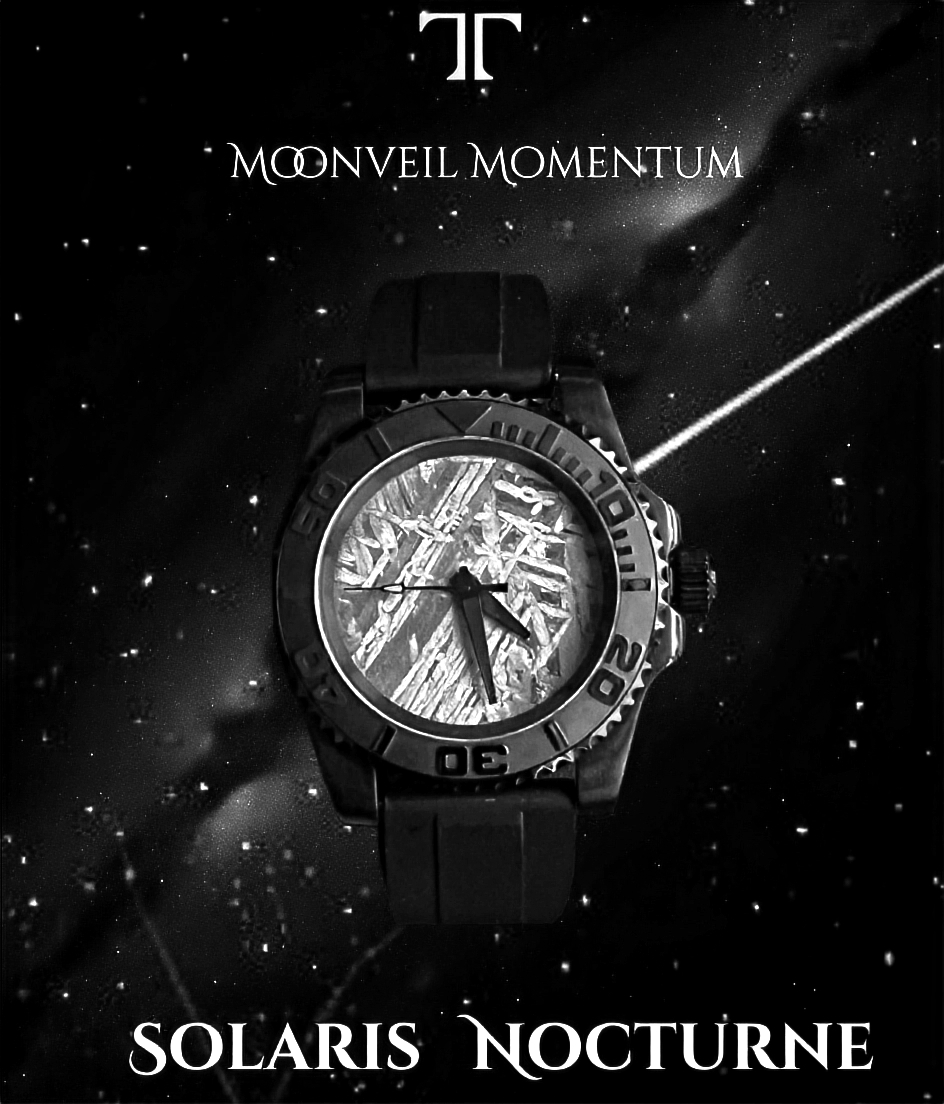
Solaris Nocturne takes the 40mm format into a darker register. A PVD black case, black bezel and hands, genuine Muonionalusta meteorite dial, and the choice of black rubber or black metal change the same underlying idea into something quieter and more nocturnal. The automatic movement is 24 jewel, runs at 21,400 beats per hour, and carries a 40-hour reserve.
The dual bracelet setup is important because it changes the attitude without changing the watch. Rubber makes it more direct and modern. Metal makes it sharper and more formal. That kind of range is useful to us. A Tempo watch should have a strong identity without locking the person wearing it into one setting.
The point of the collection
Moonveil Momentum is not about proving that four watches can share a logo. It is about proving that a brand can repeat a set of principles without repeating itself. Mechanical movement. Material honesty. Strong proportion. Real meteorite where verified. A visual language that can move from steel to gold to black without losing its center.
That is the Tempo idea in its simplest form: the object should feel composed before the story begins. The story is there to bring you closer to the decisions, not to rescue the watch from them.


Comments